
2000-2003
R&D begins in Riga
First prototype of the stationary descent device is developed and tested around a simple requirement: usable under stress without specialist setup.
TITUM has been engineering individual escape systems since the early 2000s, before most buildings had a plan.
Engineering depth
20+ years
Track record
5,000+
Certification
EN 341
Patent
Secured
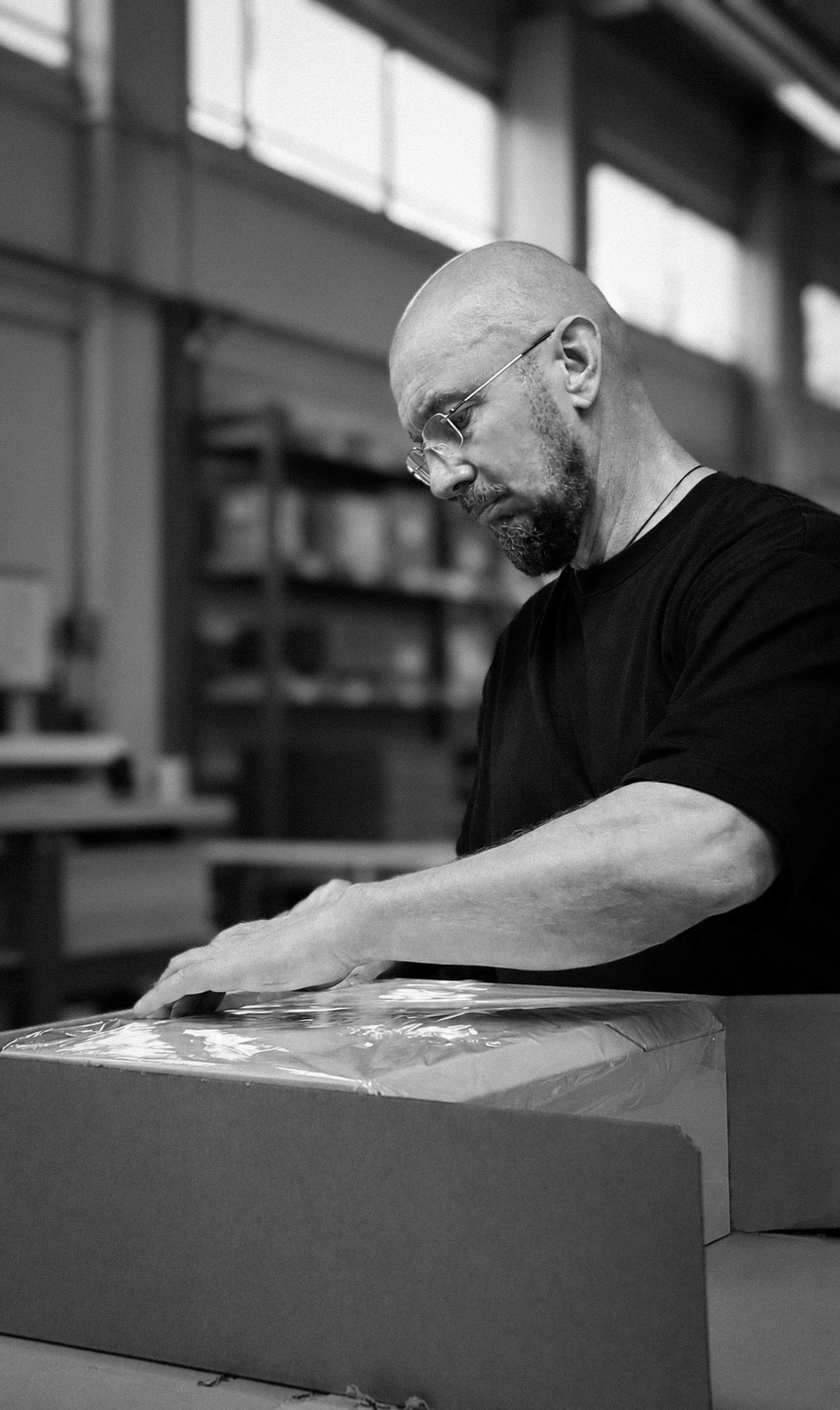
Assembly
Riga, Latvia
Core proof
Patent secured
Use case
High-rise rescue
About TITUM Safety Systems
The founding insight came from watching how high-rise fires unfolded: stairs blocked, firefighters overwhelmed, people with no way out. Juris Cepurits, a rescue-systems specialist from Latvia, began developing a stationary descent device that required no training, no preparation, and no specialist intervention.
After years of research and engineering, TITUM became the first company in the European Union to receive a safety certificate for an individual rescue device of this class. The system was tested and certified against EN 341:2011, TR CU 019/2011, and Kazakhstan's ST RK 1910-2009, with patent protection secured for the core braking mechanism.
From the first installations in Kazakhstan high-rises to government buildings, energy-sector facilities, and residential complexes across the Baltics and Central Asia, more than 5,000 TITUM devices have now been installed. What started in Riga as a technical response to a human failure point has matured into permanent safety infrastructure.
Company timeline
From Riga R&D to certified deployments across government, energy, and residential portfolios, TITUM grew by solving the same problem repeatedly under real scrutiny.
2000-2003
First prototype of the stationary descent device is developed and tested around a simple requirement: usable under stress without specialist setup.
2006
Certification is completed and TITUM becomes the first EU-certified individual rescue device in its class.
2007
Kazakhstan SNiP RK 2.02-05-2002 references individual rescue devices, opening a defined regulatory path for TITUM deployments.
2008
Devices are installed across JSC National Company KazMunayGas facilities, supported by a formal reference letter.
2009
JSC KazTransOil deploys TITUM across its portfolio and issues a reference letter confirming delivery and performance.
2009-2010
Recommendations follow from the Presidential Security Service of Kazakhstan, MES agencies, Samruk-Kazyna, Kazakhtelekom, KazTransOil, and KazMunayGas.
2010-2015
More than 3,000 devices are installed as assembly consolidates in Riga with EU-sourced components from the UK, Germany, Poland, Italy, France, Sweden, and Finland.
2016-2022
The T60, T120, and T180 product family expands supported descent height to 180 meters and operating loads to 20-150 kg.
2023-2025
EN 341:2011 certification is renewed as TITUM expands in the Baltics and Poland and prepares for UAE market entry.
2026+
Active expansion continues into the UK, Poland, and UAE with TITUM positioned for PEEPs-driven adoption and broader international specification.
How it's made
TITUM is assembled in Riga with a supply chain built around durable metals, fire resistance, and mechanical predictability. The device is designed to remove weak links before they can become failure modes.
Component sourcing
Final assembly
Riga, Latvia [LV]
Rope specification
Galvanized special steel rope, 4 mm diameter, 1,340 kg break strength, fire-resistant up to 450 °C.
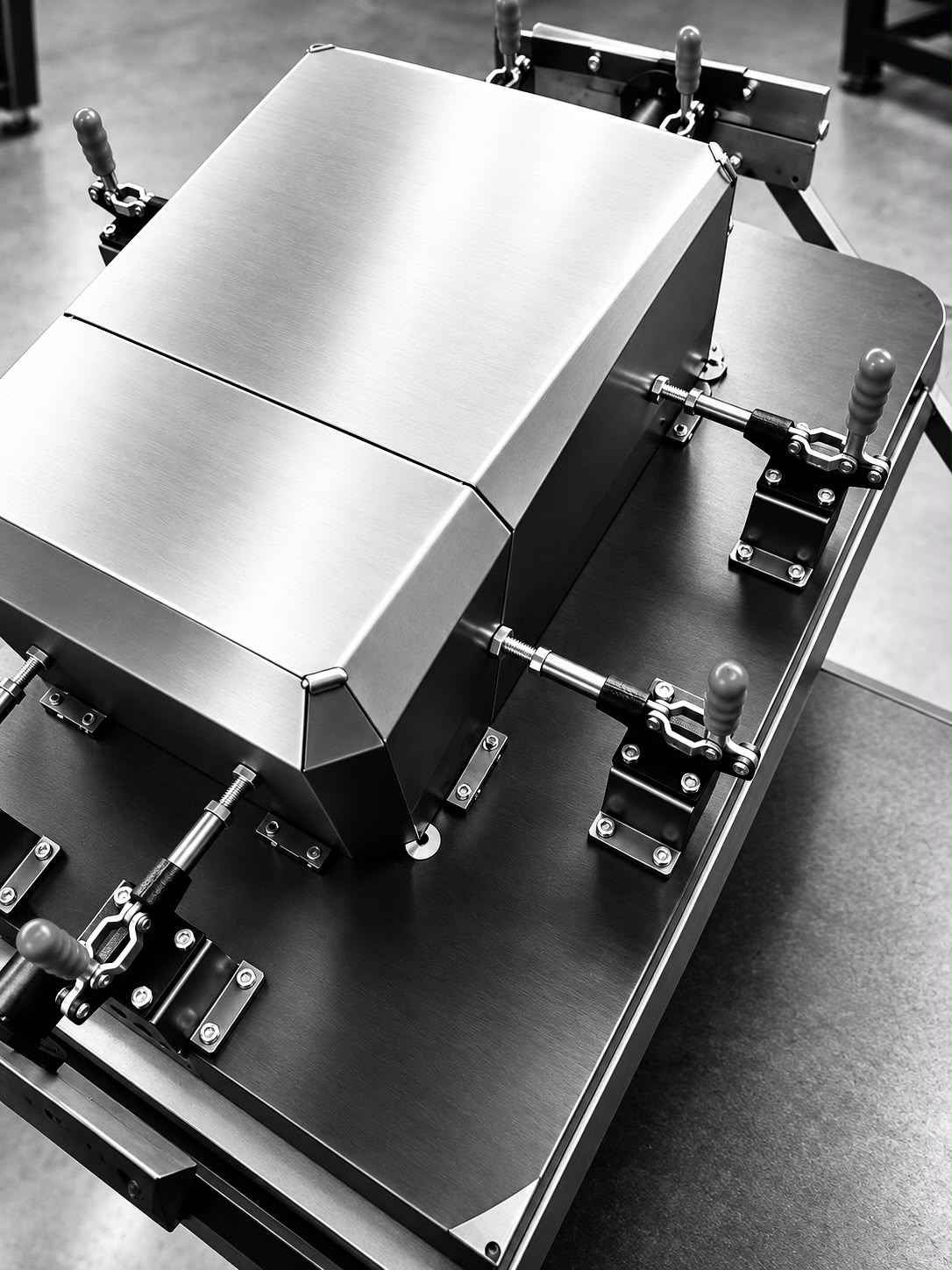
Close-up manufacturing view showing TITUM rope guidance and descender mechanism assembly.
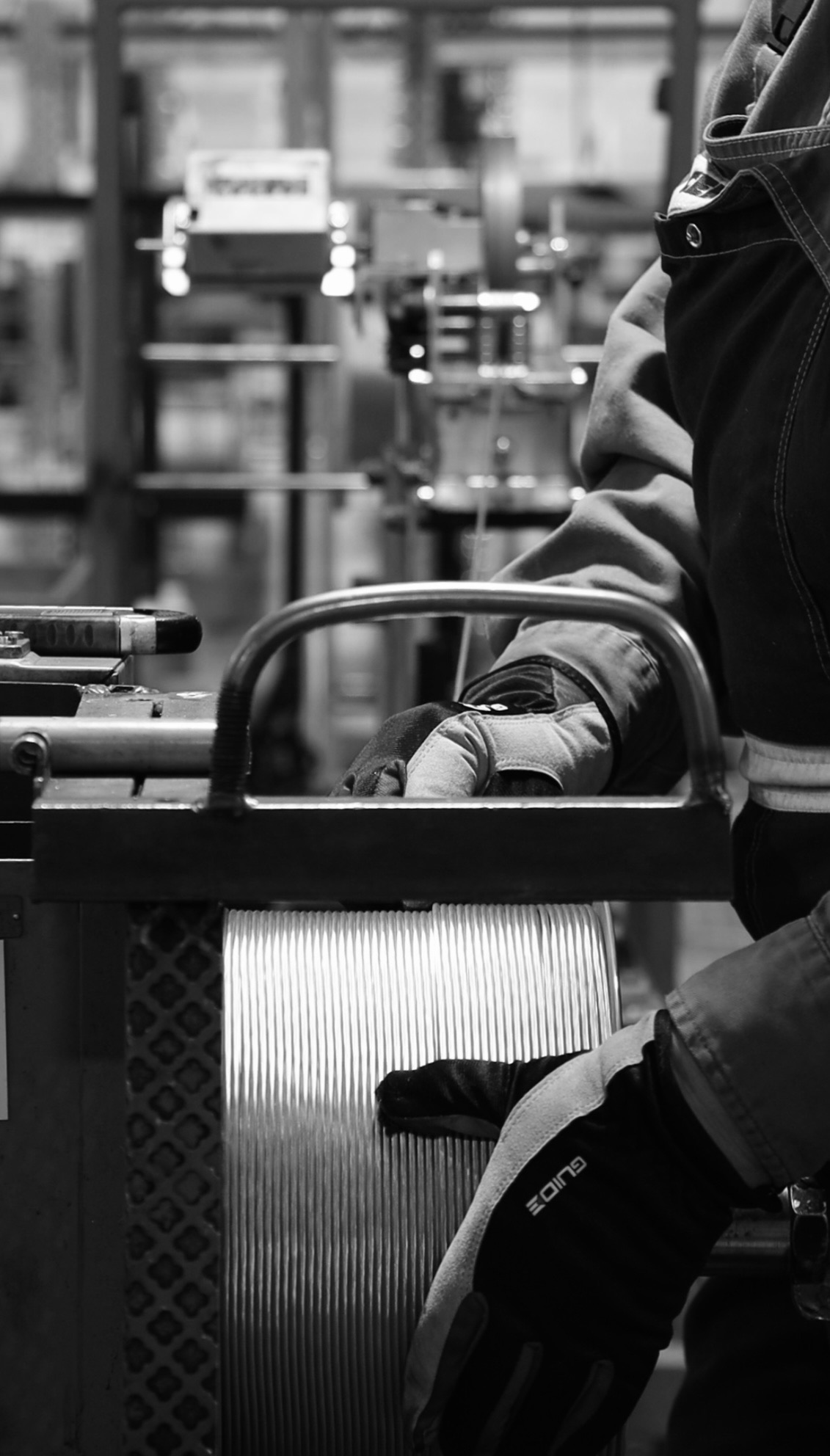
Test-bench inspection used to document individual pre-delivery quality checks before shipment.

Finished TITUM units packed on the production line and prepared for outbound delivery.
Credentials & recognition
TITUM's credibility was built through procurement reviews, field demonstrations, and long-cycle installations where performance mattered more than marketing language.
 KazMunayGas
 KazTransOil
 Samruk-Kazyna
 Kazakhtelekom
 JSC “NC Kazakhstan Temir Zholy”
 National Olympic Committee of Kazakhstan
 Presidential Security Service of Kazakhstan
 MES Kazakhstan
Reference letters and compliance documents are available for download on our Certifications page .
Specification CTA
If your team needs engineering proof, compliance documentation, or a practical path to deployment, start the due-diligence conversation here.